What a 6.7 L/100 km Rating Actually Tells a Sportage HEV Owner
A fuel economy number on a window sticker rarely explains itself. The 2026 Sportage HEV carries a combined rating of 6.7 L/100 km, and for shoppers comparing it against a gas-only compact SUV, that figure needs context before it means anything for daily driving in Ontario.
What The 6.7 L/100 Km Figure Actually Is
Combined fuel economy is not a single test result. It’s a blend of city and highway driving folded into one number, meant to represent a mix of stop-and-go traffic and steady-speed cruising rather than either extreme alone.
For the Sportage HEV, the city, highway, and combined figures all land at 6.7 L/100 km. That consistency across driving types is itself informative: this isn’t a powertrain that only shines on the highway or only in traffic. It performs similarly in both.
This is a planning metric, not a guarantee. Your own number will move up or down depending on load, terrain, temperature, and how you drive, but 6.7 L/100 km is the baseline for comparing the Sportage HEV against other vehicles on your shortlist.
How The Hybrid System Delivers That Number
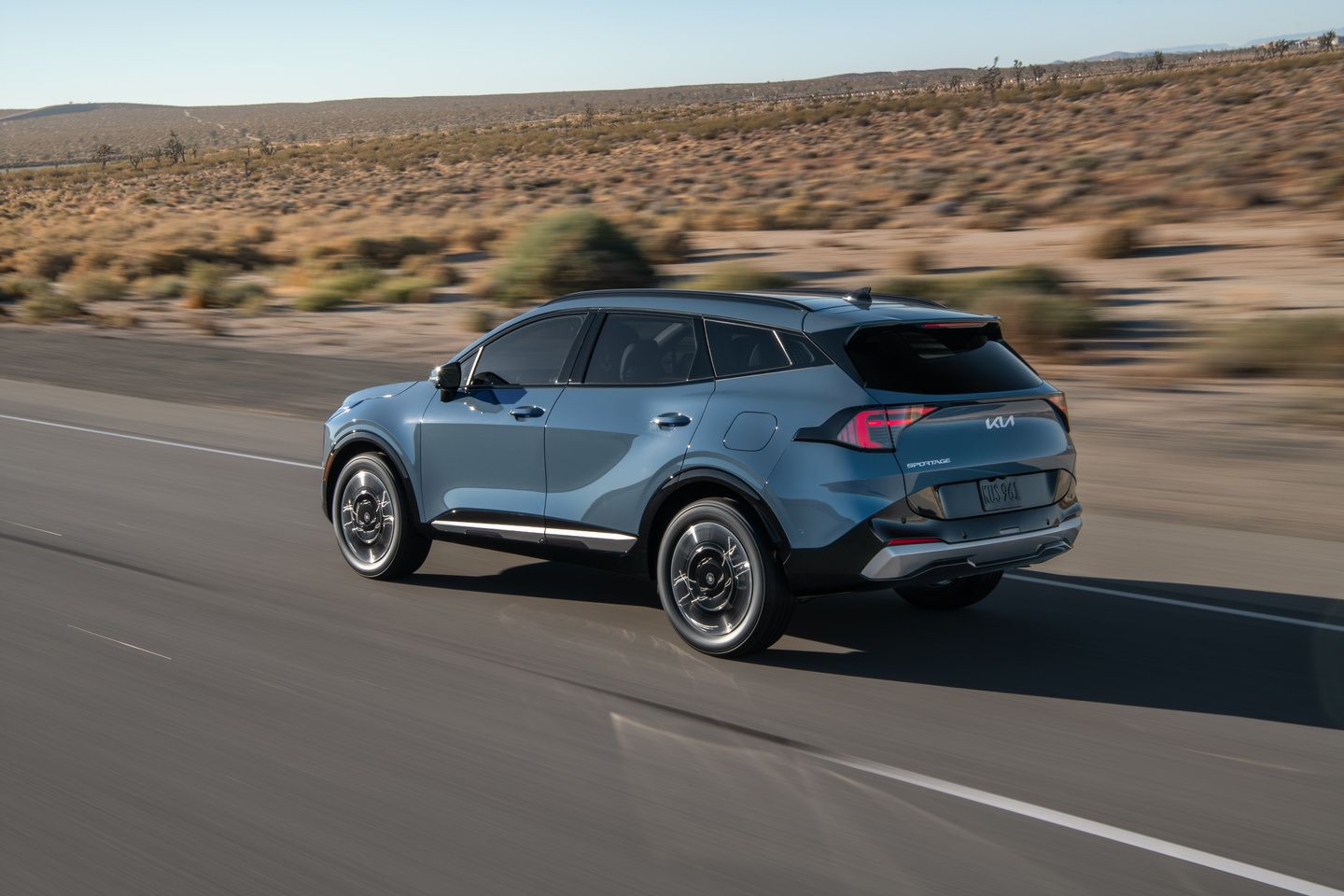
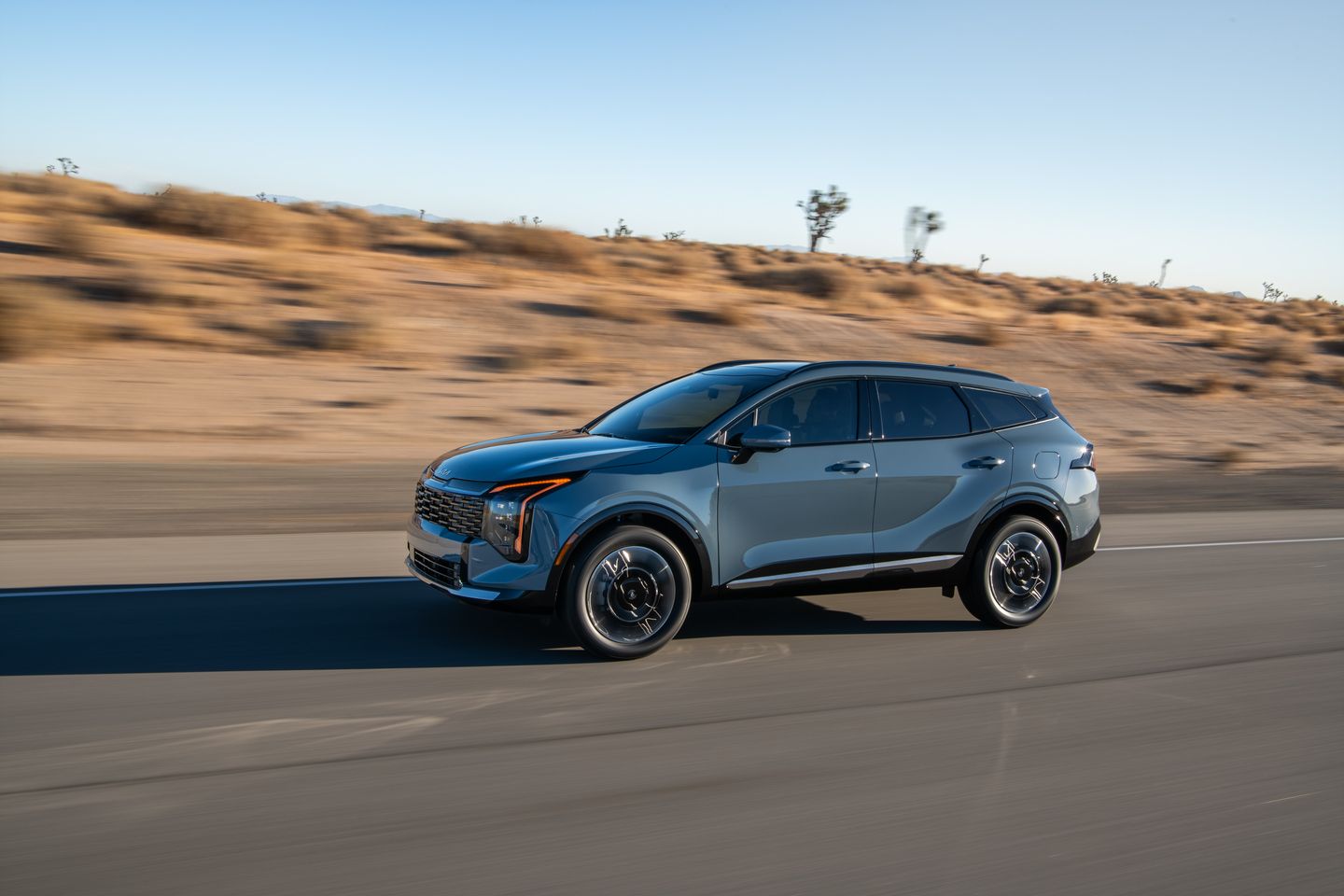
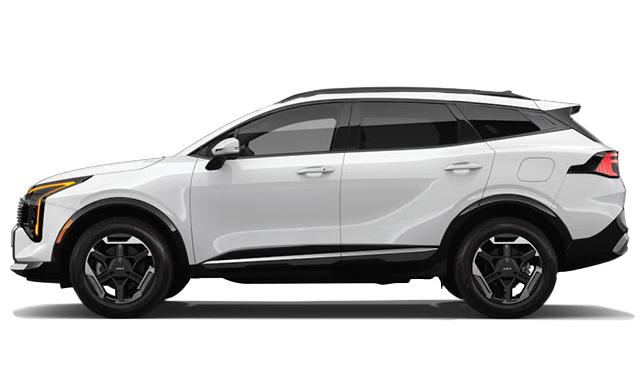
The Sportage HEV pairs a 1.6 L turbocharged gasoline engine with an electric motor rated at 47.7 kW, running through a 6-speed automatic transmission. Combined output is 231 horsepower. All-wheel drive is standard on the HEV.
The two power sources work as a partnership rather than a straight swap. At low speeds and in stop-and-go traffic, the electric motor can carry more of the load, cutting the engine’s workload exactly where a conventional gas engine is least efficient. At steady highway speeds, the gasoline engine does more of the work while the electric motor assists.
That’s why the driving feel changes depending on the situation. In traffic, the hybrid system is quieter and less reliant on the engine cycling on and off. On the highway, it behaves more like a conventional AWD SUV, with the electric motor topping up torque rather than replacing it.
AWD is part of this specific hybrid setup, not a separate option bolted on. For Ontario drivers, that matters because traction and efficiency aren’t competing goals here. You get all-wheel drive as standard equipment on the HEV without giving up the combined rating.
Why This Number Matters Beyond The Window Sticker
A combined rating is most useful as ownership shorthand: how often will you need to stop for fuel if your driving matches the mix the rating assumes? At 6.7 L/100 km, a Sportage HEV driven on a routine of commuting, errands, and weekend trips should need less frequent fill-ups than a comparable gas-only compact SUV rated closer to 8.9 L/100 km combined, which is where the gasoline Sportage lands.
Winter changes the math, though never the vehicle’s underlying efficiency. Cold starts ask more of the gasoline engine before it reaches operating temperature, and the electric motor’s contribution can shrink when the battery itself is colder. Heavier winter accessory use, like cabin heating and heated components, also adds load. None of this erases the advantage over a non-hybrid Sportage, but it does mean a Sportage HEV owner in Ontario should expect the number to drift upward in January compared to a mild September.
Short trips work against any combined rating, hybrid or not. A vehicle that never gets the chance to warm up, or that spends most of its time in heavy traffic, won’t consistently match the rated figure. Longer, mixed drives, the kind that combine some city streets with some steady cruising, tend to track closer to what’s on the sticker.
Who The Sportage HEV Fits, And Who Should Look Elsewhere
The 6.7 L/100 km figure is most relevant to drivers whose routines actually resemble the blend it represents: commuting, school runs, shopping trips, and suburban driving with a mix of stops and steady stretches. If that’s your week, the rating is a reasonably honest predictor of your fuel stops.
It’s less meaningful for someone who drives almost exclusively short trips under a few kilometres, or almost exclusively at highway speeds for long stretches. Annual mileage matters too. A driver covering a high volume of kilometres a year will feel the difference between 6.7 L/100 km and 8.9 L/100 km far more than someone driving occasionally.
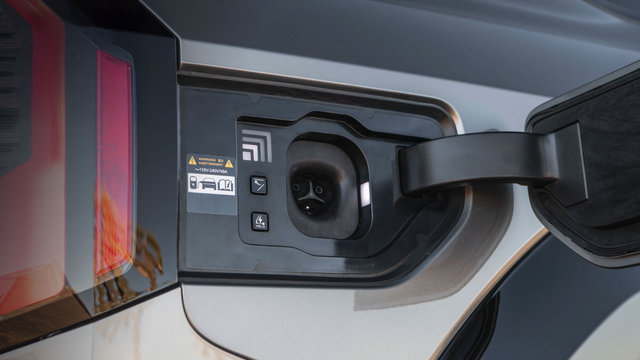
The HEV suits a shopper who wants fewer fuel stops without adopting a plug-in routine. Unlike the Sportage PHEV, which needs charging to deliver its best results, the HEV never asks you to plug in. You fuel it exactly like a conventional vehicle, just less often.
Families and commuters who want an AWD compact SUV for Ontario’s mixed roads and seasonal conditions are a natural fit here, particularly if cargo space matters: the HEV offers 1,852 L behind the front seats and 977 L behind the rear seats. Towing is limited to 2,000 lbs (907 kg), so anyone planning to tow a larger trailer should weigh that against the ICE Sportage’s 3,500 lb (1,588 kg) rating before assuming the hybrid fits every use case.
Matching the vehicle to your actual routine, rather than to the spec sheet alone, is the real exercise here. A commuter with a 40-minute mixed drive gets real value from the 6.7 L/100 km rating. A driver doing mostly 5-minute trips to pick up groceries will see a different number, regardless of which Sportage they choose.
Seeing How The Number Fits Your Drive
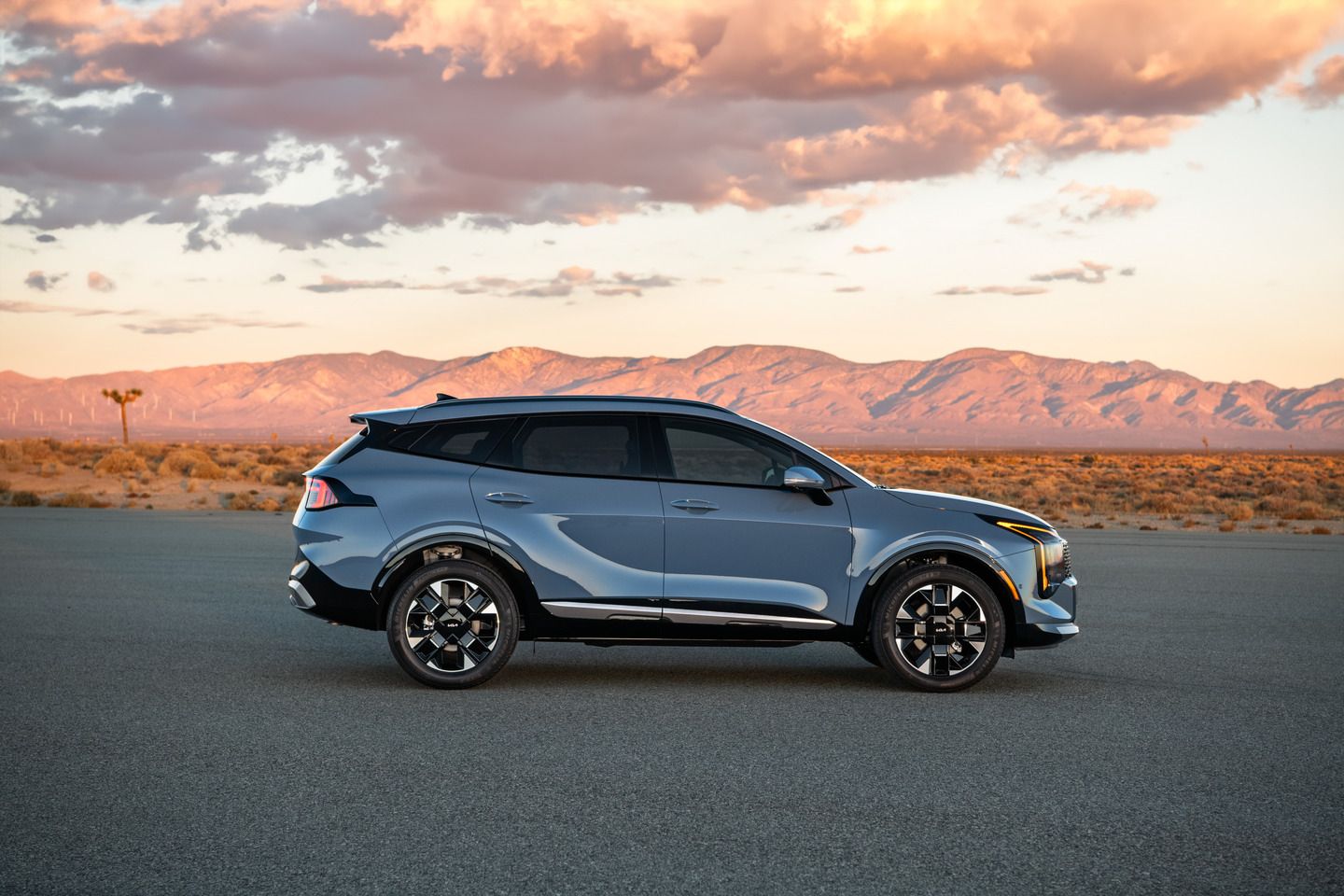
The Sportage HEV’s 6.7 L/100 km combined rating reflects a hybrid system built around AWD and a driving mix of city and highway use, not a single ideal condition. How closely you approach it depends on your own routes, trip length, and season.
Visit Cobourg Kia in Cobourg to talk through how your typical driving pattern lines up with the Sportage HEV’s efficiency story, compare trims in person, and get behind the wheel for a test drive.
To learn more about the 2026 Kia Sportage HEV, visit Kia.ca