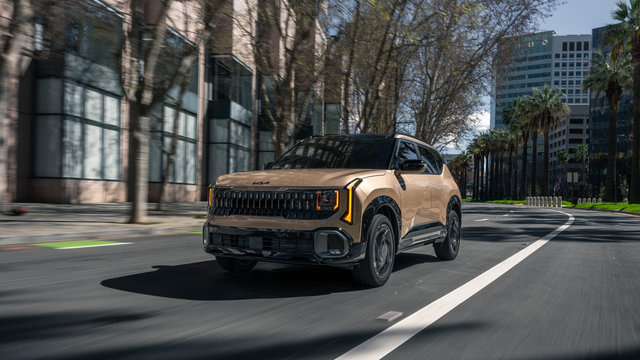
Merging onto a busy Ontario highway with a full SUV asks a lot of a powertrain. You need power right now, not a beat later, and you need the tires to hold their line if the pavement is wet or rutted.
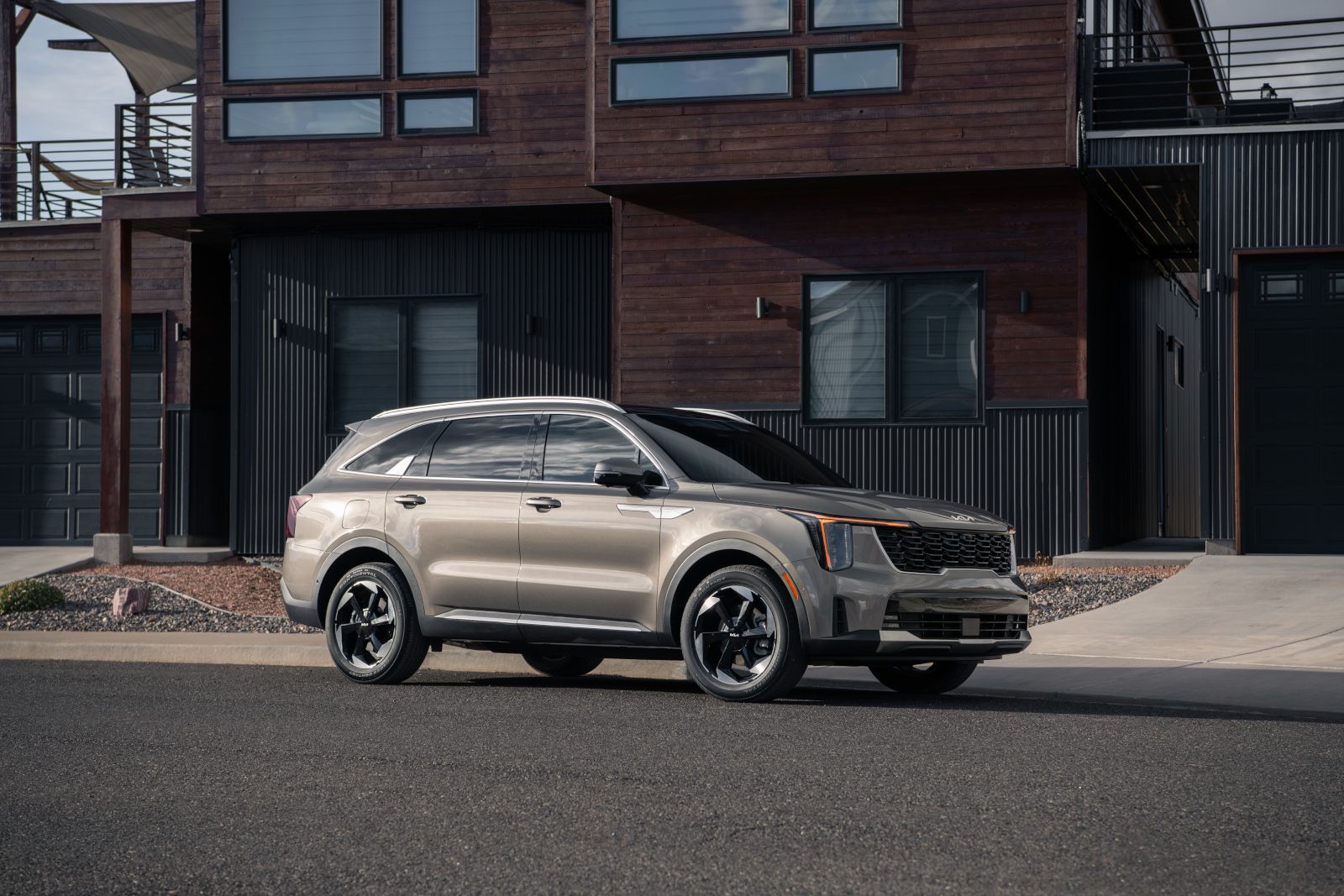
The 2027 Sorento PHEV pairs a plug-in hybrid system with Active On-Demand All-Wheel Drive to handle exactly that moment. Here’s what that combination actually does when you’re accelerating onto traffic.
What the Sorento PHEV’s AWD System Is
The Sorento PHEV runs Active On-Demand All-Wheel Drive across every trim: LX, EX, and SX. It pairs with a 1.6 L turbocharged four-cylinder engine and a Permanent Magnet Synchronous electric motor, drawing from a 13.8 kWh, 360 V lithium-ion polymer battery.
Combined output lands at 268 hp and 270 lb-ft of torque, routed through a 6-speed automatic. That’s a meaningful step up from the Sorento HEV’s 227 hp and 258 lb-ft, both figures relevant when you’re the one pulling into a gap in traffic.
How Power Gets to the Road
At low speed, the electric motor supplies torque instantly, before the gasoline engine has to spin up and do its share. That’s the trait that matters most on an on-ramp: torque arrives without the lag of a purely gas-fed engine building revs.
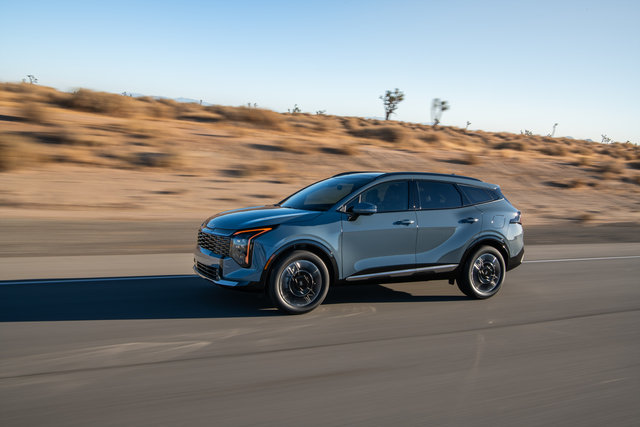
Active On-Demand AWD then decides, continuously, how much of that torque goes to the rear wheels versus the front. In normal driving on dry pavement, the system leans front-biased for efficiency. When it detects wheel slip, whether from a damp lane, slush, or an uneven shoulder, it shifts torque rearward to restore grip.
Drive Mode Select lets the driver adjust throttle mapping and shift behaviour. Sport mode holds gears longer and sharpens throttle response for a passing move; Normal mode smooths delivery for daily commuting. Paddle shifters on the 6-speed automatic let a driver hold a lower gear manually before a merge, if they want to plan the pull themselves rather than wait for a kickdown.
Why This Matters on Ontario Highways
Merging confidence comes down to three things: how quickly power arrives, how much grip the tires have when you ask for it, and how composed the SUV feels once you’re up to speed. The Sorento PHEV’s electric assist covers the first, AWD covers the second, and the suspension tuning, independent MacPherson struts up front and a multi-link rear, covers the third by keeping the body settled through a lane change.
The PHEV’s power delivery feels strongest at the exact moment most drivers need it: from a stop or a low-speed roll, where the electric motor’s instant torque fills in before the engine reaches its stride. On an open highway once you’re already at speed, the gap between the PHEV and HEV narrows, since both share the same transmission and suspension.
AWD does not replace driver judgment. It restores traction once you ask for it, but leaving enough following distance and matching your speed to the merge lane still matters more than any drivetrain. The system supports a confident merge; it doesn’t remove the need to plan one.
Battery state affects the feel too. With charge available, the motor can carry more of the initial push, so acceleration feels smoother and quieter. When the battery runs low, the gasoline engine picks up more of the load and behaviour leans closer to the standard Hybrid model. A short commute that starts each day with a full charge will feel more electric; a long highway run will spend more time relying on the 1.6 L engine once the battery draws down.
HEV vs PHEV: A Quick Contrast
|
Spec
|
Sorento HEV (SX)
|
Sorento PHEV (SX)
|
|
Horsepower
|
227 hp
|
268 hp
|
|
Torque
|
258 lb-ft
|
270 lb-ft
|
|
Fuel economy (combined)
|
7.0 L/100 km
|
6.9 L/100 km (gas only)
|
|
Electric range
|
Not applicable
|
55 km
|
|
Fuel tank
|
67 L
|
47 L
|
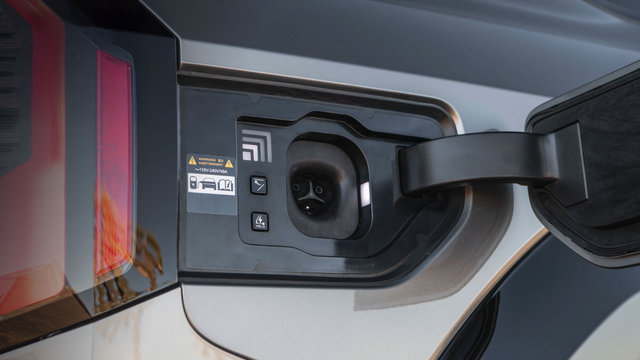
The HEV is the lighter, simpler hybrid: no plug, a smaller battery, and a fuel tank built for fewer stops on long trips. The PHEV adds 55 km of electric range and a stronger combined output, at the cost of a smaller gas tank. A buyer whose daily loop stays under that electric range gets more gas-free driving; a buyer doing consistent long highway stretches may lean toward the HEV’s larger tank and simpler ownership.
Who Notices the Difference Most
Drivers who merge onto fast-moving highways daily, in a family SUV loaded with passengers and gear, are the ones who’ll feel the PHEV’s extra torque most directly. The same goes for anyone driving through a Southern Ontario winter, where slush and freeze-thaw pavement make the AWD system’s traction management more than a formality.
All Sorento PHEV trims seat six across three rows, with cargo volume ranging from 357 L behind the third row to 2,139 L with the second and third rows folded. That flexibility matters for school runs stacked with gear one day and a weekend highway trip with the third row folded the next. A household regularly carrying six people and their equipment gets a cabin built for both without swapping vehicles.
Feeling the AWD for Yourself
The Sorento PHEV’s electric-assisted AWD is built around the moments that matter most in daily Ontario driving: pulling onto a highway, passing at speed, and holding grip when the pavement turns unpredictable. The HEV covers similar ground with a simpler setup and a larger fuel tank for those who don’t need the plug.
Visit Cobourg Kia in Cobourg to feel the Sorento PHEV’s AWD response for yourself, and ask about highway-focused use cases, charging habits, and which trim fits your household best.
To learn more about the 2026 Kia Sorento PHEV, visit Kia.ca